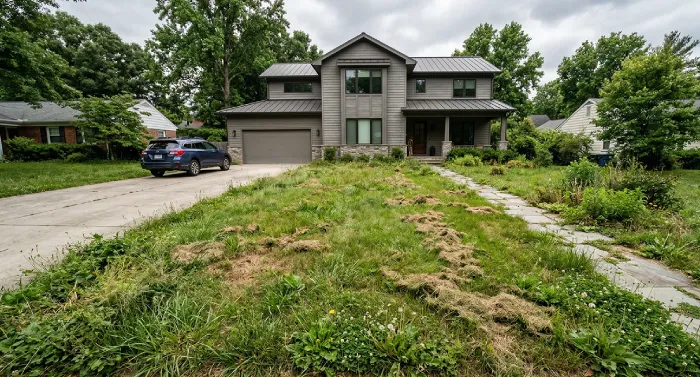
An overgrown lawn is more than just an eyesore. When grass gets too tall, it can create problems that affect the health of your yard, make mowing harder, and even attract pests. In neighborhoods like Glenmore, VA where many homeowners have larger lawns, sloped areas, or open spaces behind the home, staying ahead of rapid grass growth can become difficult during the peak growing season.
We recently spoke with a homeowner whose mower broke down, leaving a large back field untouched for weeks. By the time they called for help, the grass had grown several feet tall and become too much to manage safely on their own.
What Problems Can an Overgrown Lawn Cause?
Tall grass traps moisture near the soil, reduces airflow, and makes it harder for healthy grass to grow properly. Over time, this can weaken the lawn and create conditions that encourage weeds and lawn disease.
An overgrown yard can also:
- Hide rocks, sticks, and uneven ground
- Create thick clumps of dead grass
- Make mowing equipment work harder
- Increase weed growth
- Cause patchy or unhealthy turf
The longer the grass is left unmanaged, the more difficult it becomes to restore the lawn to a healthy condition.
Can Tall Grass Attract Pests?
Yes. Overgrown lawns often provide shelter for pests and insects that prefer cool, shaded areas.
Tall grass may attract:
- Ticks
- Mosquitoes
- Rodents
- Snakes
- Wasps and other insects
This becomes especially important for homeowners with pets, children, or outdoor gathering areas. Keeping the lawn trimmed regularly helps reduce hiding places and improves visibility throughout the yard.
Can Overgrown Grass Damage Healthy Lawn Growth?
It can.
When grass becomes excessively tall, lower blades receive less sunlight and airflow. Eventually, the lawn can become matted down, trapping moisture underneath and stressing the healthy grass below.
Trying to cut everything down at once can also shock the lawn. Removing too much height in a single mowing often leaves behind heavy clippings that smother the grass and create additional stress.
Is It Safe to Mow Extremely Tall Grass Yourself?
That depends on the size of the property and the condition of the grass.
Many residential mowers struggle with grass that is over a foot tall, especially in fields, ditch lines, or uneven areas. Thick growth can clog mower decks, damage equipment, and create safety hazards if hidden debris is present.
Professional lawn crews often use equipment better suited for overgrown areas, including:
Zero-Turn Mowers
Ideal for large open spaces and faster mowing on bigger properties.
Rough-Cut Equipment
Designed to handle thicker grass and rougher terrain.
Trimmers and Brush Cutters
Helpful for edges, fence lines, and areas regular mowers cannot safely reach.
How Do You Prevent a Lawn From Getting Out of Control?
The best solution is consistent maintenance during the growing season. Even missing a few weeks during spring or early summer can lead to rapid overgrowth, especially after periods of heavy rain.
If maintaining a large property has become physically difficult or time-consuming, scheduling occasional professional mowing can help keep the lawn manageable without falling behind.
Many homeowners in Glenmore also choose one-time mowing services after vacations, equipment breakdowns, or periods of rapid growth.
When Should You Call a Professional for an Overgrown Lawn?
You should consider professional help if:
- Grass is extremely tall or thick
- Your mower cannot handle the growth
- The property includes large open fields
- There are hidden obstacles in the yard
- Mowing has become physically difficult
Getting the lawn back under control early is usually easier and more affordable than waiting until the growth becomes severe.
Need Help With an Overgrown Lawn in Glenmore, VA?
If your yard has gotten harder to maintain, Charlottesville Lawn Care can help restore it to a manageable condition. Whether you need one-time mowing or ongoing lawn care, our team can handle overgrown grass safely and efficiently. Contact us today for lawn mowing and overgrown yard cleanup services.